In this article
- Cheetah Diet at a Glance
- What Do Cheetahs Eat in the Wild?
- 1. Gazelles
- 2. Impalas
- 3. Springboks
- 4. Young Wildebeest
- 5. Hares and Rabbits
- 6. Birds
- 7. Rodents and Other Small Animals
- Do Cheetahs Eat Meat or Plants?
- How Do Cheetahs Hunt Their Food?
- 1. Searching for Prey
- 2. Selecting a Target
- 3. Stalking the Animal
- 4. Chasing at High Speed
- 5. Catching and Killing Prey
- How Do Cheetahs Eat Their Prey?
- Do Cheetahs Eat Every Day?
- What Do Baby Cheetahs Eat?
- Milk During Early Life
- Meat as They Grow
- Learning to Hunt
- Do Cheetahs Eat Other Predators?
- Do Cheetahs Eat Livestock?
- What Animals Compete With Cheetahs for Food?
- Lions
- Spotted Hyenas
- Leopards
- African Wild Dogs
- Why Is Food Important for Cheetah Survival?
- Frequently Asked Questions About the Cheetah Diet
- 1. What is a cheetah’s favourite food?
- 2. Do cheetahs eat zebras?
- 3. Do cheetahs eat grass?
- 4. Do cheetahs eat humans?
- 5. Do cheetahs eat bones?
- 6. How often do cheetahs hunt?
- 7. Do cheetahs hunt at night?
- 8. Do cheetahs eat birds?
- Final Thoughts
- References
Cheetahs are famous for their incredible speed, but speed alone does not keep these wild cats alive. They need regular meals to maintain their energy, raise their cubs and survive in the wild.
So, what do cheetahs eat?
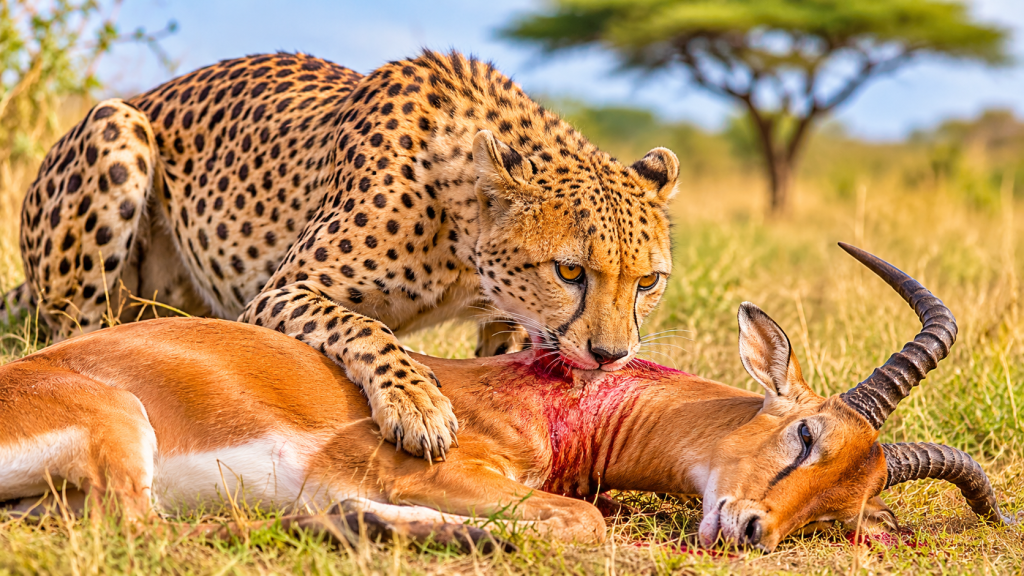
Cheetahs are carnivores. They feed mainly on small and medium-sized animals, especially antelopes such as gazelles, impalas and springboks. They also hunt hares, birds, rodents and young animals from larger species.
Their diet depends on their habitat, the availability of prey and the size of the hunting group. In this guide, you will learn what cheetahs eat, how they hunt, how they feed their cubs and how they compete with other African predators for food.
Cheetah Diet at a Glance
| Category | Details |
| Scientific name | Acinonyx jubatus |
| Diet | Carnivorous |
| Main food | Small and medium-sized antelopes |
| Common prey | Gazelles, impalas and springboks |
| Other food | Hares, birds and rodents |
| Hunting style | Stalking and short-speed pursuit |
| Hunting period | Mainly daytime |
| Feeding method | Eats fresh meat |
| Main food competitors | Lions, hyenas and leopards |
What Do Cheetahs Eat in the Wild?
Cheetahs mainly eat animals they can catch through short, fast pursuits. Their slim bodies, long legs and flexible spines help them chase prey across open grasslands.
Small and medium-sized antelopes form a major part of their diet. These animals provide the meat and energy cheetahs need to survive.
Here are some common animals cheetahs eat.
1. Gazelles
Gazelles are among the most important prey animals for cheetahs, particularly in East African grasslands.
Thomson’s gazelles are common prey in areas such as the Serengeti and Maasai Mara. Cheetahs often target young, weak or less alert gazelles because these individuals are easier to catch.
Gazelles rely on speed and sharp turns to escape predators. Cheetahs use their own speed and careful stalking to get close before starting a chase.
2. Impalas
Impalas are another important part of the cheetah diet.
These antelopes live across several African habitats, including savannas, open woodlands and grasslands. Their availability makes them a useful food source for cheetahs in many regions.
A cheetah often selects an impala separated from its herd or one showing signs of weakness. A successful hunt provides enough meat for a substantial meal.
3. Springboks
Springboks are common prey for cheetahs in southern Africa, especially in parts of Namibia, Botswana and South Africa.
These antelopes move quickly across open landscapes. Cheetahs often approach from a distance, remain low to the ground and wait for a suitable opportunity to attack.
Springboks provide an important source of food in dry, open habitats where other prey species might be less common.
4. Young Wildebeest
Although cheetahs mainly target small and medium-sized animals, they sometimes hunt young wildebeest.
Adult wildebeest are large and strong, which makes them difficult for a single cheetah to overpower. Young calves offer a more manageable target.
Male cheetahs living in coalitions sometimes work together to catch larger prey. Even then, they often target younger animals rather than fully grown adults.
5. Hares and Rabbits
Cheetahs also eat smaller mammals such as hares.
These animals provide another food option when antelopes are difficult to find. A cheetah does not need to catch a large animal for every meal.
Hares rely on quick movement and sudden changes in direction to escape. Cheetahs use their eyesight and acceleration to catch them.
6. Birds
Ground-dwelling birds also form part of the cheetah diet.
Depending on the habitat, cheetahs hunt birds such as guinea fowl and other species living close to the ground.
Birds do not form the main part of their diet, but they provide additional food when an opportunity arises.
7. Rodents and Other Small Animals
Cheetahs sometimes eat small mammals, including rodents.
These animals usually provide less meat than antelopes, but they remain part of the wider range of prey available to cheetahs.
The type of small animals they hunt depends on their location and the species living in their habitat.
The Cheetah Conservation Fund identifies gazelles, impalas, hares, birds and rodents among the animals cheetahs hunt in the wild. [1]
Do Cheetahs Eat Meat or Plants?
Cheetahs eat meat. They are carnivores and depend on other animals for food.
Their natural diet includes fresh prey such as antelopes, hares, birds and small mammals. Plants, fruits, grass and leaves do not form part of their normal diet.
Unlike herbivores, cheetahs have teeth and digestive systems suited to eating animal tissue.
How Do Cheetahs Hunt Their Food?
Cheetahs rely on eyesight, patience and speed when hunting.
They do not chase every animal they see. Instead, they study their surroundings and select prey before starting an attack.
Their hunting process usually follows these stages.
1. Searching for Prey
A cheetah scans open grasslands and nearby vegetation for potential prey.
Elevated areas such as termite mounds offer useful viewpoints. From these positions, a cheetah gets a better view of nearby herds.
2. Selecting a Target
After spotting a group of animals, the cheetah selects an individual.
Young, injured, isolated or less alert animals often attract attention because they present easier hunting opportunities.
3. Stalking the Animal
The cheetah lowers its body and moves slowly towards the selected target.
Grass and other vegetation help conceal its movements. The cat tries to approach close enough to reduce the distance needed for the final chase.
4. Chasing at High Speed
Once the cheetah reaches a suitable position, the chase begins.
Its powerful legs and flexible spine help produce long strides. The cheetah accelerates rapidly, follows the target and attempts to knock the animal off balance.
The chase usually lasts a short time because high-speed running requires considerable energy.
5. Catching and Killing Prey
After catching an animal, the cheetah uses its jaws to grip the throat and suffocate the prey.
Small animals might die from a bite to the head or neck.
The cheetah then rests briefly after the exhausting chase before eating.
How Do Cheetahs Eat Their Prey?
Cheetahs usually feed on the flesh of animals they catch.
They often begin eating after recovering from the physical effort of hunting. Unlike hyenas, which possess strong jaws for crushing bones, cheetahs generally focus on the meat.
They often avoid eating much of the skin and bones.
Cheetahs also face competition from larger predators. Lions, hyenas and leopards sometimes steal their kills, forcing them to eat quickly.
This competition makes feeding time risky, especially in areas with high numbers of large carnivores. The San Diego Zoo describes how cheetahs often eat quickly because other predators and scavengers threaten their kills. [2]
Do Cheetahs Eat Every Day?
Cheetahs do not follow a fixed daily feeding schedule.
Their feeding frequency depends on hunting success, prey availability, their energy needs and whether they have cubs to feed.
An adult cheetah with access to enough prey might go several days between successful meals. A mother raising cubs often needs to hunt more frequently because she must provide food for herself and her growing offspring.
A failed hunt also means the cheetah must continue searching for another opportunity.
What Do Baby Cheetahs Eat?
Baby cheetahs, known as cubs, depend on their mother for food during their early development.
Milk During Early Life
Newborn cubs feed on their mother’s milk. This provides the nutrients they need during their first weeks of life.
The mother stays close to her cubs and protects them from danger.
Meat as They Grow
As cubs grow, their mother begins introducing them to meat.
They gradually learn how to eat prey and understand the hunting behaviour they will need as adults.
Learning to Hunt
Young cheetahs learn by watching their mother stalk and chase animals.
The mother provides important hunting experience before her cubs become independent.
Young cheetahs eventually leave their mother and begin hunting for themselves. Their survival depends heavily on finding suitable prey and avoiding larger predators.
Do Cheetahs Eat Other Predators?
Cheetahs mainly hunt herbivores and smaller animals.
They do not normally target large predators such as lions, leopards or hyenas. These animals present serious risks and are not suitable regular prey.
A cheetah focuses on animals it has a reasonable opportunity to catch and overpower.
Do Cheetahs Eat Livestock?
Cheetahs generally prefer wild prey.
Livestock attacks sometimes occur, especially when natural prey becomes scarce or when vulnerable animals enter areas used by cheetahs. Young, injured or older cheetahs might also target livestock under certain conditions.
The Cheetah Conservation Fund explains that wild prey remains strongly preferred and that livestock protection methods, including secure enclosures, help reduce losses. [3]
What Animals Compete With Cheetahs for Food?
Cheetahs share their habitats with other predators. Some of these animals compete for similar prey, while others steal cheetah kills.
The main competitors include:
Lions
Lions are larger and stronger than cheetahs. They sometimes take over cheetah kills and pose a serious threat to adult cheetahs and cubs.
Spotted Hyenas
Spotted hyenas often compete with cheetahs for food. Their strong jaws and social hunting behaviour give them an advantage when confronting a cheetah.
Leopards
Leopards share some prey species with cheetahs. They also pose a threat because of their strength and ability to ambush other animals.
African Wild Dogs
African wild dogs hunt antelopes and other medium-sized animals. Their hunting success creates competition for food in shared habitats.
These interactions influence where cheetahs hunt, when they feed and how long they stay near a kill.
Why Is Food Important for Cheetah Survival?
Food affects almost every part of a cheetah’s life.
Cheetahs need enough meat to maintain their bodies, recover after hunting and reproduce successfully.
A reliable supply of prey also helps mothers raise healthy cubs.
When human activities reduce wildlife populations or damage natural habitats, cheetahs face greater difficulty finding food. Habitat loss, prey decline and conflict with livestock owners create additional pressure on wild populations.
Protecting natural habitats and maintaining healthy prey populations therefore play important roles in cheetah conservation.
Frequently Asked Questions About the Cheetah Diet
1. What is a cheetah’s favourite food?
Cheetahs have no single favourite food across all habitats. Gazelles, especially Thomson’s gazelles in parts of East Africa, form an important part of their diet. Impalas and springboks also provide major food sources in other regions.
2. Do cheetahs eat zebras?
Cheetahs rarely hunt adult zebras because zebras are large and strong. A single cheetah generally targets smaller prey. Young or vulnerable animals from larger species sometimes become prey.
3. Do cheetahs eat grass?
No. Cheetahs are carnivores and feed on animal flesh. Grass and other plants do not form part of their normal diet.
4. Do cheetahs eat humans?
Cheetahs do not normally hunt humans. Their natural prey consists mainly of antelopes and smaller animals.
5. Do cheetahs eat bones?
Cheetahs generally focus on the meat and tend to avoid much of the skin and bones. Their feeding habits differ from those of hyenas, which have strong jaws for crushing bones.
6. How often do cheetahs hunt?
Cheetahs hunt when they need food. Hunting frequency varies with prey availability, hunting success and their energy requirements. Mothers raising cubs often need to hunt more frequently.
7. Do cheetahs hunt at night?
Cheetahs mainly hunt during daylight, especially in the early morning and late afternoon. Daytime hunting helps them use their eyesight and reduces some encounters with larger nocturnal predators.
8. Do cheetahs eat birds?
Yes. Cheetahs sometimes hunt ground-dwelling birds. Birds form a smaller part of their diet compared with antelopes.
Final Thoughts
Cheetahs are specialised hunters with a diet built around small and medium-sized animals. Gazelles, impalas and springboks provide much of their food, while hares, birds and rodents offer additional prey.
Their hunting success depends on good eyesight, careful stalking and short bursts of speed. Yet catching prey does not always guarantee a meal. Lions, hyenas and other predators sometimes take their kills.
Understanding what cheetahs eat helps explain their role in African ecosystems and why protecting their natural prey remains essential for their survival.
References
- Cheetah Conservation Fund. About Cheetahs. https://cheetah.org/learn/about-cheetahs/
- San Diego Zoo Wildlife Alliance. Cheetah. https://animals.sandiegozoo.org/animals/cheetah
- International Union for Conservation of Nature, Cat Specialist Group. Living Species: Cheetah. https://www.catsg.org/living-species-cheetah
- Smithsonian’s National Zoo. Cheetah. https://nationalzoo.si.edu/animals/cheetah
Related wildlife stories

Join the discussion
Ask a question, add a useful fact, or share your view. Please stay on topic.