
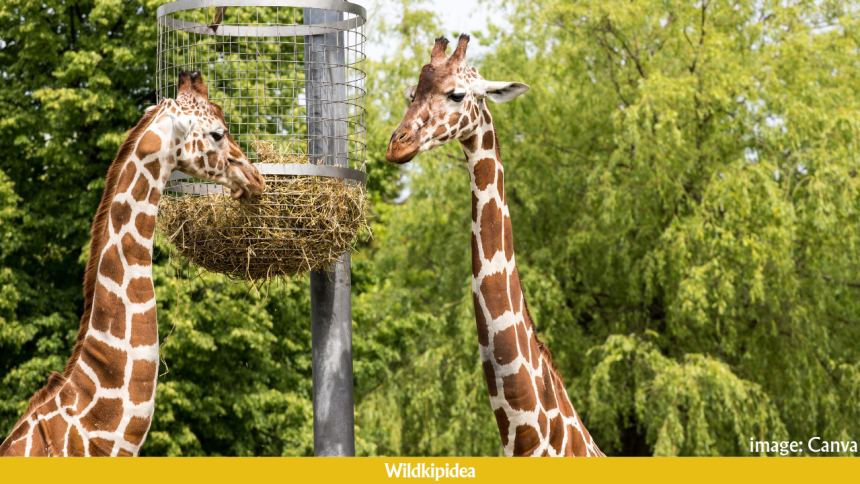
Giraffes are famous for their long necks, tall bodies and unique spotted coats. But one question often comes up: what do giraffes eat?
Giraffes are herbivores and mainly feed on leaves, shoots, flowers, seedpods and other plant material. Unlike grazing animals such as zebras and wildebeest, giraffes are browsers. They spend much of their feeding time picking leaves from trees and shrubs [1].
Their diet changes according to habitat, season and food availability. Trees from the Vachellia and Senegalia groups, often called acacia trees, form an important part of the diet across many African habitats [1].
What Do Giraffes Eat?
The main foods in a giraffe’s diet include:
- Tree leaves
- Fresh shoots
- Flowers
- Seedpods
- Fruits
- Shrubs
- Herbs
- Vines
- Small amounts of other plant material
Leaves form the largest part of the diet in many areas. Giraffes often select soft, nutritious foliage from trees and shrubs [1].
A giraffe uses its long neck and tongue to reach vegetation growing above the feeding level of many other herbivores.
What Do Giraffes Eat in the Wild?
In the wild, giraffes mainly eat browse from woody plants. Their food choices depend on the vegetation available in their habitat.
Common foods include leaves from Vachellia, Senegalia, Faidherbia, Terminalia and other tree species [1][2].
Giraffes also eat:
- Fresh tree shoots
- Young branches
- Flowers
- Seedpods
- Seasonal fruits
- Herbs
- Vines
The exact diet differs between regions. A giraffe living in northern Namibia might feed on different plants from a giraffe living in Kenya or Tanzania.
Giraffe Diet: Leaves Are the Main Food
Leaves are the foundation of the typical giraffe diet.
Giraffes often target leaves high in trees because such food is easier to reach with a long neck. Acacia-type trees are among their preferred food sources [1].
Leaves also provide water. In dry habitats, moisture from plants becomes an important part of a giraffe’s daily water intake [3].
Giraffes therefore do not always need to visit waterholes frequently.
Do Giraffes Eat Acacia Leaves?
Yes. Acacia leaves are an important food for many giraffes across Africa.
Modern botanical classification places many traditional African acacia species within the genera Vachellia and Senegalia. Giraffes feed on foliage from these trees despite their sharp thorns [1].
A giraffe has special feeding adaptations for dealing with thorny plants.
Its tongue is long, muscular and flexible. Thickened structures on the tongue help protect the surface while the animal pulls leaves from branches.
Read: What Do Elephants Eat? Complete African Elephant Diet Guide
How Do Giraffes Eat Leaves From Thorny Trees?
Giraffes have several adaptations for feeding on thorny trees.
Their long tongue reaches between branches and thorns. The tongue wraps around vegetation and pulls leaves into the mouth [4].
Their lips also help select individual leaves.
Giraffes do not simply bite an entire branch. They often choose specific parts of a plant based on food quality and availability.
This selective feeding helps explain why giraffes are known as browsers rather than grazers.
Do Giraffes Eat Grass?
Giraffes are not primarily grass eaters.
Grass forms a much smaller part of their diet compared with leaves and other browse. Giraffes are adapted mainly for feeding on trees and shrubs [1].
This feeding strategy separates giraffes from many African grazing animals.
For example:
- Zebras mainly feed on grass.
- Wildebeest mainly feed on grass.
- Giraffes mainly feed on leaves and other browse.
- Elephants feed on both grass and woody vegetation.
Different feeding strategies reduce direct competition for food within African ecosystems [5].
What Do Giraffes Eat Besides Leaves?
Although leaves are important, giraffe food includes more than foliage.
Giraffes also eat:
Fresh Shoots
Young shoots provide soft plant material and nutrients. Giraffes often select fresh growth when available.
Flowers
Flowers form part of the diet in some habitats and seasons.
Seedpods
Giraffes feed on seedpods from suitable tree species.
Fruits
Seasonal fruits also form part of the diet in some regions.
Shrubs and Herbs
Giraffes sometimes browse shrubs and herbs, especially when preferred tree foliage is less available.
What Do Baby Giraffes Eat?
Baby giraffes receive milk from their mothers during early life.
As calves grow, they gradually begin eating plant material. Young giraffes learn feeding behavior by watching adult animals around them.
Leaves, shoots and other browse eventually become the main food source.
The transition from milk to solid food is important because a young giraffe needs to develop the feeding skills required for life in the wild.
How Much Do Giraffes Eat Per Day?
Giraffes spend a large part of the day feeding.
The amount of food consumed varies according to body size, season, habitat and food quality. Some sources report adult giraffes eating tens of kilograms of plant material per day.
Giraffes often travel across large areas while searching for suitable browse.
Food availability therefore influences movement patterns and habitat use.
What Do Giraffes Eat During the Dry Season?
The dry season creates major changes in African vegetation.
Many plants lose their leaves during periods of low rainfall. Giraffes respond by selecting available evergreen trees and other plants capable of maintaining foliage during dry conditions [1].
In dry regions, access to suitable trees becomes especially important.
Giraffes living in arid parts of Namibia, for example, feed on vegetation adapted to dry conditions.
Their ability to obtain moisture from plants also helps them survive in areas where surface water is limited [3].
Also Read: What Do Lions Eat in the Wild? | Complete Lion Diet Guide
What Do Giraffes Eat During the Rainy Season?
Rain brings new plant growth across many African habitats.
During the wet season, giraffes often feed on fresh, broad leaves and other new vegetation.
Fresh growth provides a changing food supply and gives giraffes more choices.
Seasonal feeding also means a giraffe’s diet is not identical throughout the year.
How Does a Giraffe Find Food?
Giraffes use their height, eyesight, smell and feeding adaptations while searching for food.
Their height gives them access to vegetation growing high above the ground. Their long tongue helps them select leaves from branches.
Giraffes also move between areas as food availability changes.
A suitable giraffe habitat therefore needs enough trees and shrubs to provide food throughout different seasons.
Do Male and Female Giraffes Eat the Same Food?
Male and female giraffes share many of the same food sources, but feeding height and food selection sometimes differ.
Adult males often feed higher in trees because their greater height gives them access to upper foliage. Females often browse at lower levels [1].
Research also shows differences in the nutritional quality of food selected by males and females.
Such differences help reduce competition between individuals feeding in the same area.
Why Do Giraffes Have Long Necks?
Food is one important factor linked to the giraffe’s long neck.
A long neck gives giraffes access to vegetation above the feeding levels used by many other herbivores [5].
Research on giraffe feeding behavior has shown an advantage from accessing both high and lower vegetation [5].
The long neck is not the only feature involved in feeding. Long legs, a flexible tongue, strong lips and specialized teeth all work together.
How Do Giraffes Digest Their Food?
Giraffes are ruminants.
Their digestive system is designed to process plant material. After swallowing food, giraffes later regurgitate partially digested material and chew it again as cud.
This process helps break down plant material and extract nutrients.
Their teeth also play an important role in grinding food before digestion.
Do Giraffes Drink Water?
Yes, giraffes drink water when available.
They also obtain considerable moisture from the plants they eat.
Giraffes sometimes go several days without drinking. In dry environments, plant moisture becomes especially important.
Drinking also puts giraffes in a vulnerable position. A giraffe must spread its front legs or bend its knees to lower its head toward the ground.
Do Giraffes Eat Meat?
Giraffes are herbivores, so plant material forms the normal basis of their diet.
Rare observations have documented giraffes chewing bones and other animal remains. Researchers describe this behavior as osteophagia. Such behavior appears linked to mineral intake rather than normal meat eating [6].
These unusual observations do not change the fact that giraffes are primarily plant-eating animals.
Why Is a Giraffe’s Diet Important to the Ecosystem?
Giraffes play a role in shaping vegetation.
Their browsing removes leaves and stimulates new growth in some tree species.
Giraffes also help move seeds through the environment after eating certain plant materials. Seeds pass through the digestive system and later leave the animal in droppings.
This makes giraffes part of the natural process of plant growth and seed movement across African landscapes.
Read: Where Do Giraffes Live in Africa? Habitats Explained
How Does Habitat Affect a Giraffe’s Diet?
Food availability depends heavily on habitat.
Woodlands and savannas provide trees and shrubs suitable for browsing. When natural vegetation is cleared for farming, roads or settlements, giraffes lose important feeding areas.
Habitat fragmentation also separates populations from seasonal food sources.
Protecting natural habitats therefore protects the food supply needed by wild giraffes.
Frequently Asked Questions
What do giraffes eat most?
Leaves from trees and shrubs form the main part of a giraffe’s diet. Vachellia and Senegalia foliage are important food sources across many African regions [1].
Do giraffes eat grass?
Giraffes are primarily browsers rather than grazers. Leaves, shoots and other woody plant material form a much larger part of their diet [1].
Do giraffes eat acacia leaves?
Yes. Acacia-type trees are among the important food sources for giraffes across many African habitats.
What do baby giraffes eat?
Young giraffes initially depend on their mother’s milk. As calves grow, they gradually begin eating leaves and other plant material.
How much do giraffes eat each day?
Food intake varies according to body size, habitat, season and food quality. Some conservation sources report daily intake reaching several tens of kilograms of plant material.
Do giraffes eat meat?
Giraffes are herbivores. Rare observations of giraffes chewing bones or animal remains have been documented, but such behavior is unusual and differs from their normal plant-based diet [6].
Do giraffes drink water?
Yes. Giraffes drink when water is available, while also obtaining substantial moisture from vegetation.
Why do giraffes eat leaves from tall trees?
Their height and long neck give them access to vegetation growing above the feeding levels of many other herbivores.
Bottom Line
So, what do giraffes eat?
Giraffes mainly eat leaves, shoots, flowers, seedpods, fruits and other plant material. Their diet is built around trees and shrubs rather than grass.
Their long neck, flexible tongue, strong lips and specialized digestive system all support a browsing lifestyle.
Understanding the giraffe diet also helps explain why healthy woodlands, savannas and other natural habitats matter. Without enough suitable vegetation, wild giraffes lose an essential source of food and water.