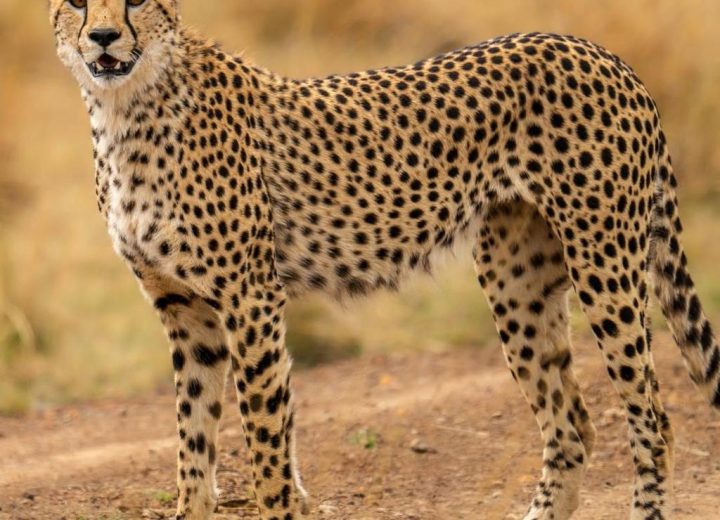
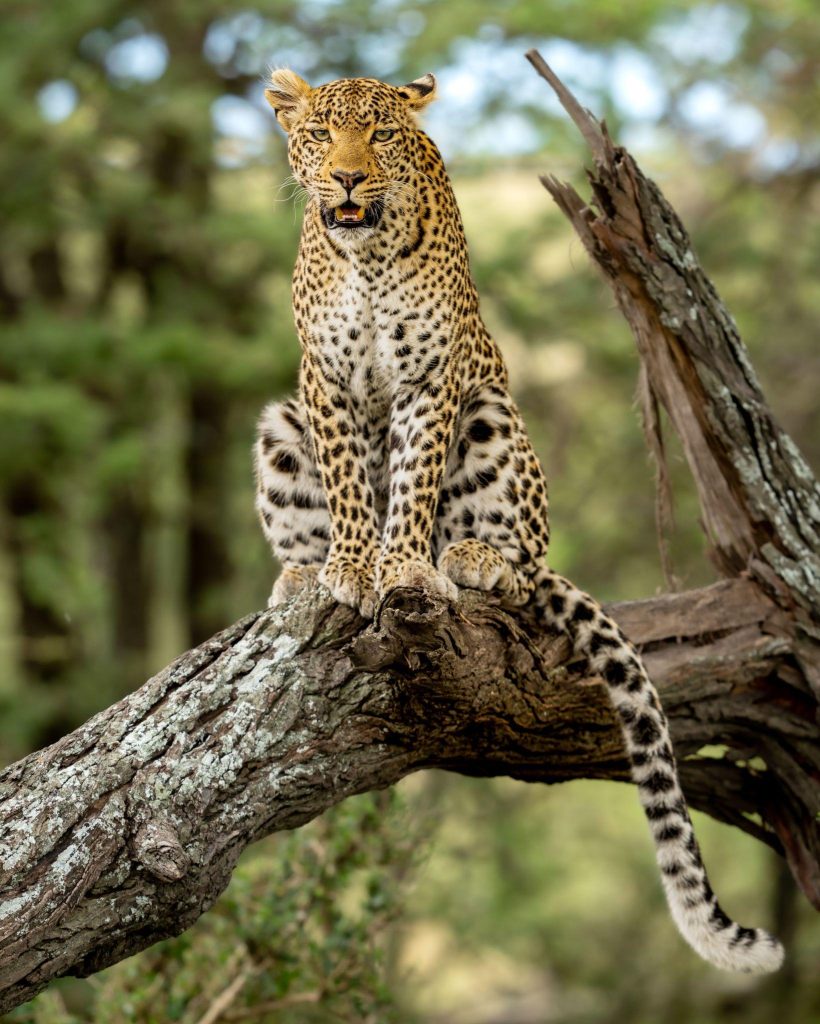
The leopard (Panthera pardus) is a powerful, adaptable wild cat known for its golden coat covered in dark rosette-shaped spots. Native to parts of Africa and Asia, this solitary predator lives in forests, grasslands, savannas and mountainous regions. Leopards are skilled hunters, excellent climbers and strong swimmers. They feed on a wide variety of animals and often carry their kills into trees to protect them from other predators.
Animal encyclopedia
leopard
Panthera pardus
Vulnerable (VU) Global IUCN Red List status. The species-level assessment was last conducted on 11 July 2015 and published in an amended 2020 assessment. The African leopard subspecies was separately assessed on 15 May 2024 and listed as Vulnerable in the 2025 Red List.
Overview
Fast facts
| Scientific name | Panthera pardus |
|---|---|
| Conservation status | Vulnerable (VU) Global IUCN Red List status. The species-level assessment was last conducted on 11 July 2015 and published in an amended 2020 assessment. The African leopard subspecies was separately assessed on 15 May 2024 and listed as Vulnerable in the 2025 Red List. |
| Native habitat | Tropical rainforests, savannas, grasslands, dry forests, shrublands, mountains, rocky landscapes and semi-deserts. |
| Geographic distribution | Across parts of sub-Saharan Africa, North Africa and Asia, including the Arabian Peninsula, India, Sri Lanka, Southeast Asia, China and the Russian Far East. Its range has declined considerably. |
| Average size | Head-and-body length: approximately 91–191 cm. Tail length: 51–101 cm. Shoulder height varies by subspecies and sex. |
| Average weight | Approximately 17–90 kg across the species. Males are generally heavier than females. |
| Lifespan | Around 10–12 years in the wild. Some individuals live beyond 20 years in captivity. |
| Diet and feeding | Carnivore. Eats antelopes, deer, monkeys, baboons, wild pigs, rodents, birds, reptiles and other available animals. Often carries its kill into a tree to protect it from scavengers and competing predators. |
| Behavior | Usually solitary and territorial. Mostly active at night, dusk and dawn, although activity varies by habitat. Excellent climbers and swimmers. Uses scent marks, scratch marks and vocalisations to communicate. |
| Reproduction | Gestation lasts approximately 90–105 days. Females usually give birth to 2–3 cubs, although litters range from 1–6. Mothers raise cubs alone. Young typically become independent around 12–18 months. |
| Threats and predators | Habitat destruction, prey depletion, poaching, illegal wildlife trade, human-wildlife conflict and road accidents. Lions, spotted hyenas, tigers and African wild dogs sometimes kill leopards. Cubs face additional threats from adult predators. |