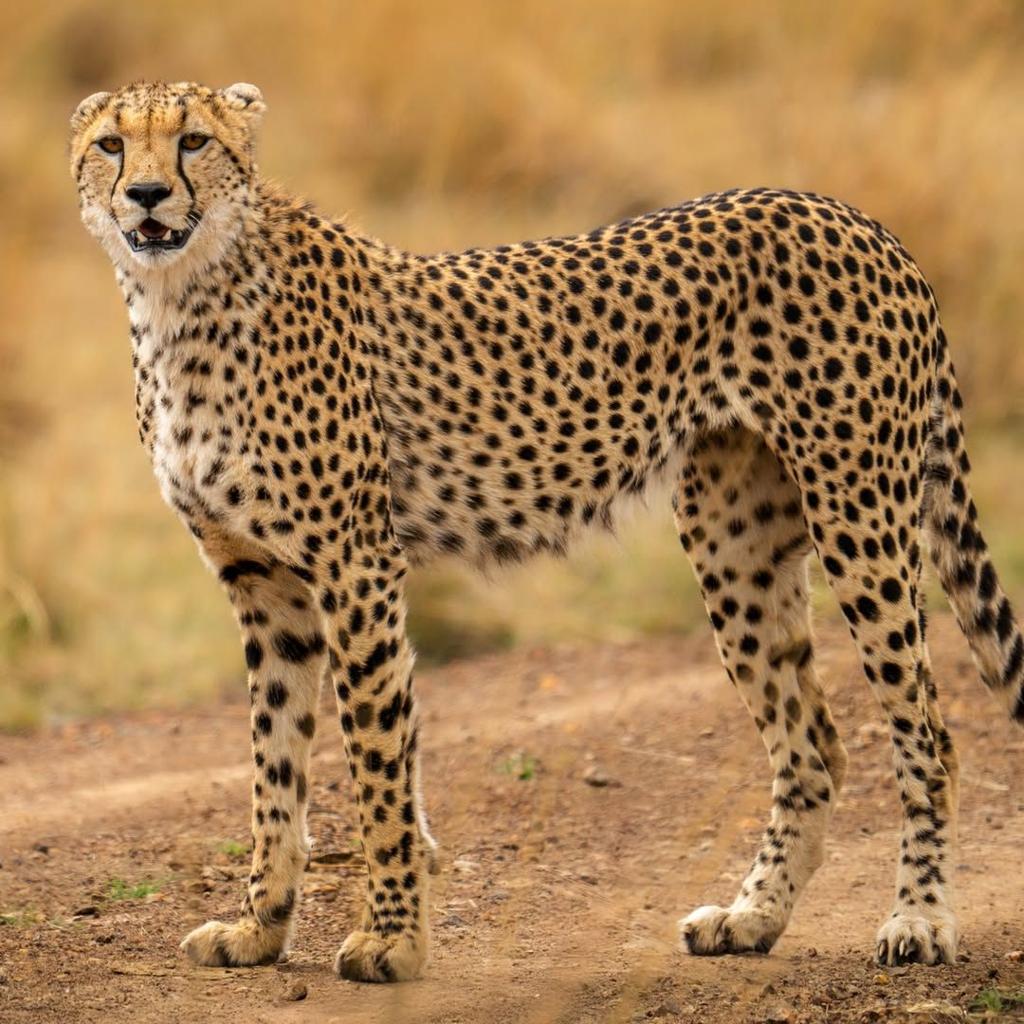
The cheetah (Acinonyx jubatus) is the world’s fastest land animal, known for its slender body, spotted coat and distinctive black tear marks running from its eyes to its mouth. Native to parts of Africa and Iran, this carnivorous wild cat hunts mainly gazelles and other small to medium-sized animals. Cheetahs prefer open grasslands and savannas, where their speed and sharp eyesight help them catch prey.
Animal encyclopedia
Cheetah
Acinonyx jubatus
Vulnerable (UV) Global IUCN Red List status. Latest amended assessment published in 2024, based on an assessment dated 17 May 2021.
Overview
Fast facts
| Scientific name | Acinonyx jubatus |
|---|---|
| Conservation status | Vulnerable (UV) Global IUCN Red List status. Latest amended assessment published in 2024, based on an assessment dated 17 May 2021. |
| Native habitat | Savannas, open grasslands, dry woodlands, scrublands and semi-arid regions. |
| Geographic distribution | Fragmented populations across eastern, southern, northeastern and parts of western Africa. The Asiatic cheetah survives in Iran. |
| Average size | Head-and-body length: approximately 112–142 cm. Shoulder height: approximately 77 cm. Tail: 66–84 cm. |
| Average weight | Approximately 34–64 kg. |
| Lifespan | Around 8–10 years in the wild. Some individuals live longer in human care. |
| Diet and feeding | Carnivore. Eats gazelles, impalas, springboks, hares, birds, rodents and young antelopes. Hunts mainly during daylight. |
| Behavior | Mostly solitary females. Males often live alone or in groups called coalitions. Cheetahs are mainly active during the day and communicate through chirps, purrs, growls and other calls. |
| Reproduction | Gestation lasts approximately 90–95 days. Females usually give birth to 1–6 cubs. Mothers raise cubs without male assistance. |
| Threats and predators | Habitat loss, fragmentation, declining prey, illegal wildlife trade, human-wildlife conflict and road mortality. Lions, hyenas, leopards and African wild dogs threaten cubs and sometimes kill adults. |